

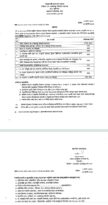
The government has issued a gazette notification forming a 10-member Wildlife Commission, headed by the Secretary of the Ministry of Environment, Forest and Climate Change, to strengthen the protection and conservation of wildlife in Bangladesh.
The notification was issued by the Ministry of Environment, Forest and Climate Change on Thursday.
The commission will work to conserve the habitats of the country’s endangered wildlife, ensure the protection of wild animals, and promote public awareness on wildlife conservation across the country. It will also focus on increasing the population of Royal Bengal Tigers and reducing human–wildlife conflict.
According to the notification, the Secretary of the Ministry of Environment, Forest and Climate Change will serve as the Chairperson of the commission, while the Conservator of Forests of the Wildlife and Nature Conservation Circle under the Forest Department will act as the Member Secretary.
Other members include the Chief Conservator of Forests, the Additional Secretary (Administration) of the Ministry of Environment, Forest and Climate Change, the Director General of the Department of Livestock Services, wildlife expert Dr. Mohammad Ali Reza Khan, natural resource management expert Ashraful Haque Nobel, the Bangladesh Country Representative of the International Union for Conservation of Nature (IUCN), Professor Dr. Monirul H. Khan of the Department of Zoology at Jahangirnagar University, and Dr. Hatem Sajjat Md. Julkar Nain, Veterinary Officer at Gazipur Safari Park.
The notification outlines the responsibilities of the commission. It will recommend measures for the conservation, management, and protection of safe habitats for elephants and other wildlife, including initiatives to recover illegally occupied wildlife habitats and restore encroached land.
The commission will also advise the government on effective measures to increase the population of Royal Bengal Tigers in the Sundarbans.
In addition, it will recommend programmes such as planting fruit-bearing trees in forests to ensure adequate food sources for wildlife and support other conservation initiatives.
To reduce human–wildlife conflict, particularly in areas adjacent to elephant habitats and other wildlife ranges, the commission will advise on awareness programmes and conservation initiatives involving local communities.
The commission will also carry out any additional responsibilities assigned by the government from time to time.
If necessary, the commission may co-opt experts or representatives of relevant institutions as members. It will hold at least one meeting every six months or convene additional meetings whenever required.