

Bangladesh has significant potential to attract large-scale investments in renewable energy and the carbon market, experts told Chief Adviser Professor Muhammad Yunus during a high-level meeting at the State Guest House today.
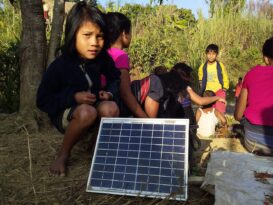
A delegation of development and renewable energy specialists, led by former Norwegian Minister for Development and Environment Erik Solheim, expressed keen interest in investing in small-scale solar projects, carbon trading, and agroforestry. They also discussed the possibility of collaborating on hydroelectricity ventures in Nepal as Bangladesh moves toward reducing its reliance on fossil fuels.
Welcoming the initiative, Prof. Yunus emphasized the government’s commitment to facilitating foreign direct investment (FDI) in these emerging sectors.
“These are critical issues for us. Bangladesh seeks substantial investments in renewable energy and the carbon market,” he stated.
He highlighted that discussions were already underway to import hydroelectricity from Nepal and Bhutan, with the goal of establishing a South Asia energy grid that could deliver power to Bangladesh through a corridor in India.
“This hydroelectric potential in Nepal is a resource waiting to be tapped, but the challenge lies in ensuring effective delivery,” the Chief Adviser noted.
Solheim, also a former UN Under-Secretary-General, pointed out that while Bangladesh lacks vast open spaces for large-scale solar farms, it is well-suited for small-scale solar installations.
Prof. Yunus affirmed that the interim government was prioritizing solar energy expansion and had invited Chinese investors to relocate solar panel manufacturing plants to Bangladesh. Several Chinese firms have already explored opportunities to establish factories in the country, aiming to export solar panels to Western markets.
Kavin Kumar Kandasamy, CEO of ProClime, a carbon trade and climate investment firm, highlighted Bangladesh’s potential to generate tens of millions of dollars through carbon trading, similar to Sri Lanka’s success in the sector.
Prof. Yunus expressed strong interest in carbon market opportunities, stating that revenues from carbon trading could support conservation efforts, particularly in the Sundarbans, the world’s largest mangrove forest.
During the hour-long discussion, the delegation also addressed the Rohingya crisis and the evolving situation in Myanmar’s Rakhine state, where a rebel group now controls much of the region.
–
From The Daily Observer